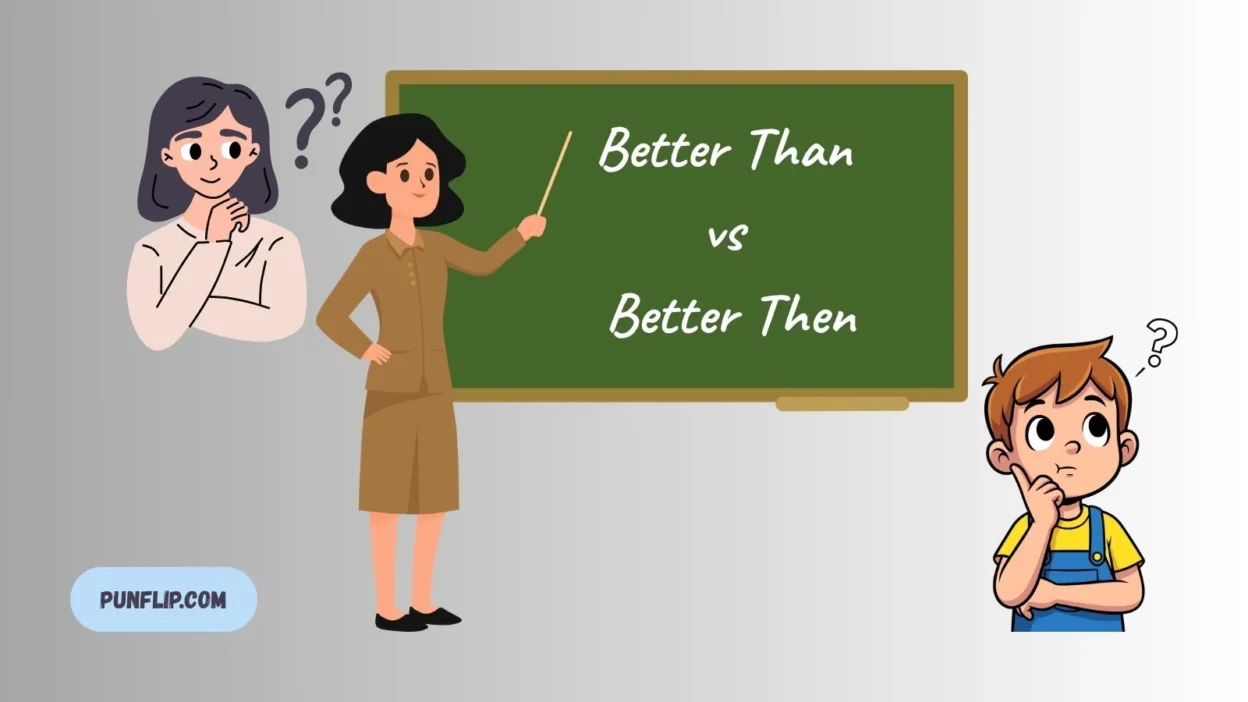
Choosing between better than and better then can be confusing, especially because the words than and then look and sound similar. Many English learners and even native speakers accidentally mix them up while writing emails, essays, social media posts, or professional documents.
The good news is that the difference is easy to understand once you know the purpose of each word. In this guide, you’ll learn when to use better than, why better then is usually incorrect, common mistakes to avoid, memory tricks, and plenty of real life examples. By the end, you’ll be able to use these expressions confidently in everyday English.
Quick Answer
Better than is the correct phrase when making a comparison. Better then is usually incorrect unless then refers to time in a sentence. Since better compares two things, it should almost always be followed by than, not then.
Why People Confuse It
The confusion happens because than and then are homophones for many English speakers. They are spelled differently but often sound nearly identical.
Other reasons include:
- Similar pronunciation
- Fast typing mistakes
- Autocorrect errors
- Lack of grammar knowledge
- Learning English as a second language
Remember that these words have completely different jobs in a sentence.
Better Than
Better than is the correct phrase for making comparisons.
Use it whenever you’re comparing one person, object, idea, or situation with another.
Examples
- Coffee is better than tea.
- This phone is better than my old one.
- She sings better than anyone in the class.
- Reading is better than watching TV all day.
- Today’s weather is better than yesterday’s.
Better Then
Better then is rarely correct.
The word then refers to time, sequence, or what happens next, not comparison.
It is only correct when the sentence is talking about a particular time.
Correct Examples
- If you’re feeling better then, we’ll go hiking.
- He wasn’t ready then, but he’s better now.
- Finish your homework, then relax.
Notice that in these examples, then means at that time or next, not comparison.
Comparison Table
| Feature | Better Than | Better Then |
| Meaning | Makes a comparison | Refers to time or sequence |
| Grammar | Correct for comparisons | Usually incorrect for comparisons |
| Common Use | Very common | Rare |
| Example | This car is better than mine. | If you’re better then, call me. |
| Easy Rule | Compare = Than | Time = Then |
When to Use Each
Use better than when:
- Comparing two people
- Comparing products
- Comparing places
- Comparing ideas
- Comparing skills
- Comparing experiences
Use better then only when:
- Talking about a specific time
- Referring to what happens next
- Meaning “at that point”
Examples
Here are more examples to help you master the difference.
- This laptop is better than my previous one.
- Swimming is better than running for my knees.
- She knows English better than French.
- My new job is better than the last one.
- It’s better than I expected.
- Nothing is better than spending time with family.
- The sequel was better than the original movie.
- You’ll feel better then after some rest.
- We can discuss it then if you’re feeling better.
- This solution is better than the other option.
- His performance was better than everyone else’s.
- Today’s internet speed is better than yesterday’s.
Common Mistakes
Many writers accidentally use then when they mean than.
Incorrect
- She is better then me.
- This cake is better then that one.
- My grades are better then last year.
Correct
- She is better than me.
- This cake is better than that one.
- My grades are better than last year’s.
Memory Trick
A simple trick makes this easy.
- Than = Comparison
- Then = Time
Think of it this way:
A in thAn = A comparison.
E in thEn = EvEnt or time.
Whenever you’re comparing two things, choose than.
American vs British English
Both American English and British English follow the same grammar rule.
There is no difference between the two varieties regarding better than and better then.
Both use:
- Better than ✔
- Better then ✖ (unless referring to time)
Similar Words
These commonly confused words often appear alongside this topic:
- Than vs Then
- Their vs There vs They’re
- Your vs You’re
- Affect vs Effect
- Accept vs Except
- To vs Too vs Two
- Who’s vs Whose
- Lose vs Loose
- Its vs It’s
- Farther vs Further
Learning these pairs will greatly improve your English writing.
Final Verdict
The correct phrase for making comparisons is better than.
Use better then only when then refers to time or sequence. If you’re comparing two things, people, ideas, or experiences, than is always the right choice.
Mastering this simple grammar rule will make your writing clearer, more professional, and grammatically correct.
Frequently Asked Questions
Is “better then” ever correct?
Yes, but only when then refers to time, such as “If you’re feeling better then, we’ll leave.”
Which is grammatically correct: better than or better then?
Better than is grammatically correct for comparisons.
Why do people write “better then”?
Because than and then sound similar, many people accidentally confuse them while typing or speaking.
Can I use “better then me”?
No. The correct expression is better than me.
Is this mistake common among native speakers?
Yes. It’s one of the most common spelling and grammar mistakes in English.
Does British English use “better then”?
No. British English follows the same grammar rule as American English.
How can I remember the difference?
Remember: Than compares. Then tells time.
Conclusion
Understanding the difference between better than and better then is easier than it first appears. The key is knowing whether you’re making a comparison or referring to time. In almost every comparison, better than is the correct choice, while better then only works when then means “at that time” or “next.”
Whether you’re writing academic papers, business emails, blog posts, or social media captions, using the correct phrase improves your credibility and makes your English sound more natural. Practice with real life examples, remember the comparison rule, and you’ll avoid this common grammar mistake with confidence.
Remember This
Compare = Better Than
Time or Sequence = Then
If you’re choosing between the two, ask yourself: Am I comparing something? If the answer is yes, use than.