English is full of colorful idioms, and “take it or leave it” is one of the most commonly used expressions in conversations, negotiations, business, and everyday life. Although native speakers use it naturally, many English learners are unsure whether it sounds rude, polite, or appropriate in different situations.
This guide explains the meaning of take it or leave it, how to use it correctly, and when you should avoid it. You’ll also discover practical examples, common mistakes, memory tricks, and differences in usage across English speaking countries. Whether you’re preparing for exams, improving your spoken English, or writing naturally, this complete 2026 guide will help you master the expression confidently.
Quick Answer
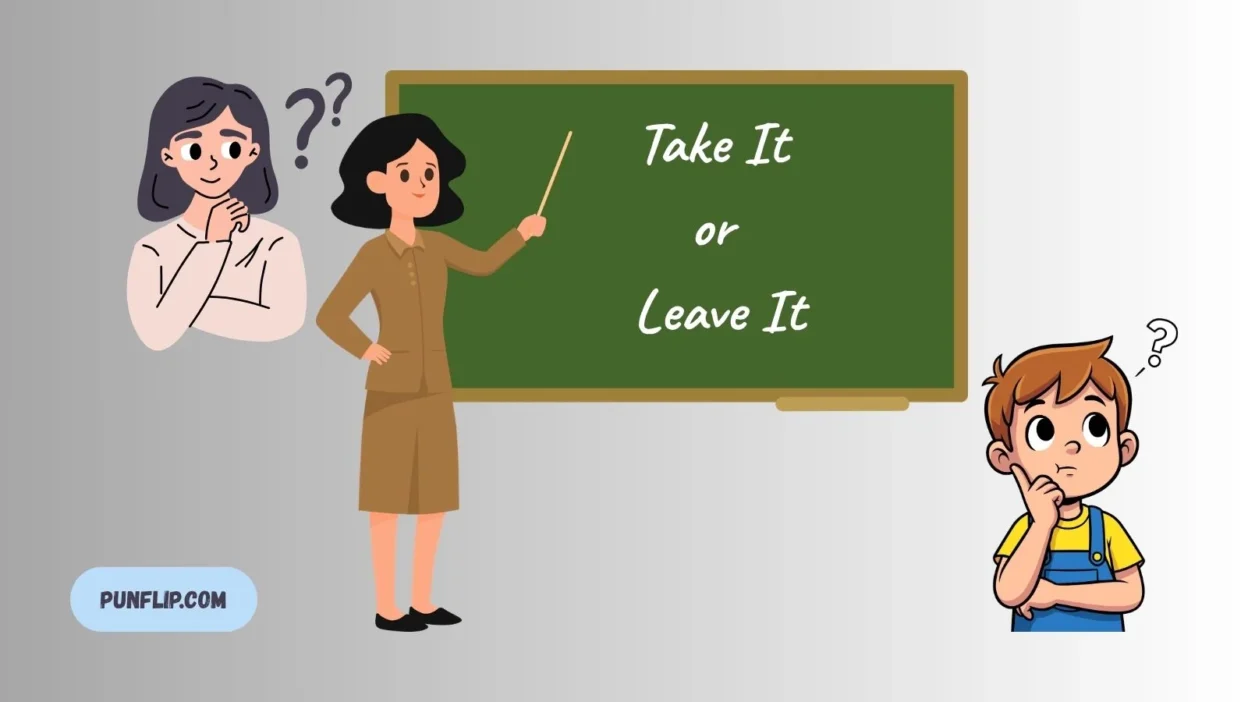
“Take it or leave it” means accept the offer exactly as it is or reject it completely. It usually implies that no negotiation or changes are possible. The phrase is common in both spoken and written English, though the tone can range from friendly to firm depending on the context.
Why People Confuse It
Many learners misunderstand take it or leave it because they interpret the words literally instead of as an idiom.
Common reasons for confusion include:
- It sounds like a command.
- People aren’t sure whether it’s polite or rude.
- It can be used jokingly or seriously.
- The tone depends heavily on context and voice.
- It appears in business, family, and casual conversations.
Understanding the speaker’s intention is the key to using this phrase naturally.
First Word: “Take”
The word take means to accept, receive, or choose something.
In this idiom, take represents accepting an offer without requesting any changes.
Examples:
- Take this opportunity.
- I’ll take the blue shirt.
- Take the deal if you’re happy with it.
Within the expression, it simply means accept it.
Second Word: “Leave It”
The phrase leave it means to reject or decline the offer.
It doesn’t literally mean leaving something behind physically. Instead, it means deciding not to accept what’s being offered.
Examples:
- If you don’t like the price, leave it.
- You can leave the offer.
- He decided to leave it and look elsewhere.
Together, the two parts create a complete choice: accept or reject.
Comparison Table
| Feature | Take It | Leave It |
| Meaning | Accept the offer | Reject the offer |
| Decision | Yes | No |
| Negotiation | No changes requested | Decline completely |
| Typical Context | Sales, negotiations, conversations | Refusing an offer |
| Tone | Accepting | Declining |
When to Use Each
Use take it or leave it when:
- The offer is final.
- No bargaining is allowed.
- You want to present two clear options.
- Discussing prices or agreements.
- Giving someone complete freedom to decide.
Avoid using it when:
- You want to sound very polite.
- Negotiation is expected.
- Speaking in formal customer service situations.
- Trying to encourage discussion.
Examples
Here are practical examples of take it or leave it in everyday English.
- This is my final price take it or leave it.
- The company won’t negotiate, so it’s take it or leave it.
- I’ll lend you the car, but these are the rules. Take it or leave it.
- The seller said the discount was take it or leave it.
- We offered our best deal, so take it or leave it.
- It’s your choice take it or leave it.
- She accepted the offer without arguing because it was take it or leave it.
- That’s the package we’re offering. Take it or leave it.
- He didn’t like the conditions, so he left it.
- The landlord made a take it or leave it offer.
- Some contracts are completely take it or leave it.
- I appreciate the offer, but I’ll leave it.
Common Mistakes
Many English learners make these mistakes:
- Saying take or leave it instead of take it or leave it.
- Assuming it is always rude.
- Using it in situations where negotiation is still possible.
- Confusing it with “accept it later.”
- Forgetting that tone affects meaning.
Memory Trick
Think of a restaurant menu with only two choices:
Take it = Accept it.
Leave it = Reject it.
There is no third option.
Remember this simple formula:
One offer. Two choices. No negotiation.
American vs British English
The expression take it or leave it is widely used in both American and British English.
American English
- Frequently heard in business, sales, and casual speech.
- Sometimes sounds firm but not necessarily rude.
Example:
“That’s our best price take it or leave it.”
British English
- Used with the same meaning.
- Speakers may soften it with polite expressions.
Example:
“I’m afraid that’s the final offer take it or leave it.”
The meaning remains the same across both varieties of English.
Similar Words
These expressions have related meanings:
- Final offer
- Non negotiable
- Accept or decline
- Your choice
- Best offer
- Firm offer
- No bargaining
- Either accept or refuse
- All or nothing
- Fixed price
Each carries a slightly different tone, but they often appear in similar contexts.
Final Verdict
Take it or leave it is a useful English idiom that presents a simple choice: accept an offer exactly as it is or reject it entirely. It is common in everyday conversations, negotiations, business discussions, and even friendly exchanges.
The key to using this expression naturally is understanding the situation and the speaker’s tone. In casual settings it can sound lighthearted, while in negotiations it often signals that no further discussion is possible.
Frequently Asked Questions
1. What does “take it or leave it” mean?
It means you can either accept an offer exactly as presented or reject it completely without negotiating.
2. Is “take it or leave it” rude?
Not always. It can sound firm, direct, or even friendly depending on the speaker’s tone and the situation.
3. Can I use it in business English?
Yes. It is commonly used when making a final offer or stating that terms cannot be changed.
4. Is it an idiom?
Yes. Take it or leave it” is a well known English idiom whose meaning cannot be understood by translating each word individually.
5. Is it common in American English?
Yes. It is widely used in both American and British English.
6. Can it be used in everyday conversation?
Absolutely. People often use it when discussing prices, invitations, agreements, or personal decisions.
7. What’s another way to say “take it or leave it”?
You can say “final offer,” “non negotiable,” “accept it or decline it,” or “that’s the best I can do.”
Conclusion
Learning idiomatic expressions like take it or leave it helps you understand real conversations and communicate more naturally. Instead of translating each word, focus on the overall meaning and the situation in which the phrase is used. This will make your English sound much more fluent.
As you continue improving your English, pay attention to how native speakers use this expression in conversations, movies, and business discussions. With regular practice, you’ll know exactly when it’s appropriate and how to use it confidently without sounding unnatural.
Remember This
“Take it or leave it” = Accept the offer exactly as it is or reject it completely. It usually means the offer is final and not open to negotiation.

Christopher Matthew is a visionary leader driven by creativity, innovation, and purpose. He turns ideas into impact through passion, persistence, and a deep commitment to excellence.