English learners often struggle with is used, has been used, and was used because all three are passive voice forms using the verb use. Although they look similar, they describe different time frames and situations. Choosing the wrong one can make your writing sound unnatural or even grammatically incorrect.
Whether you’re preparing for an English exam, writing professional emails, or improving your speaking skills, understanding these three expressions is essential. This guide explains each phrase in simple language with clear examples, practical tips, and an easy comparison table so you’ll know exactly when to use each one.
Quick Answer
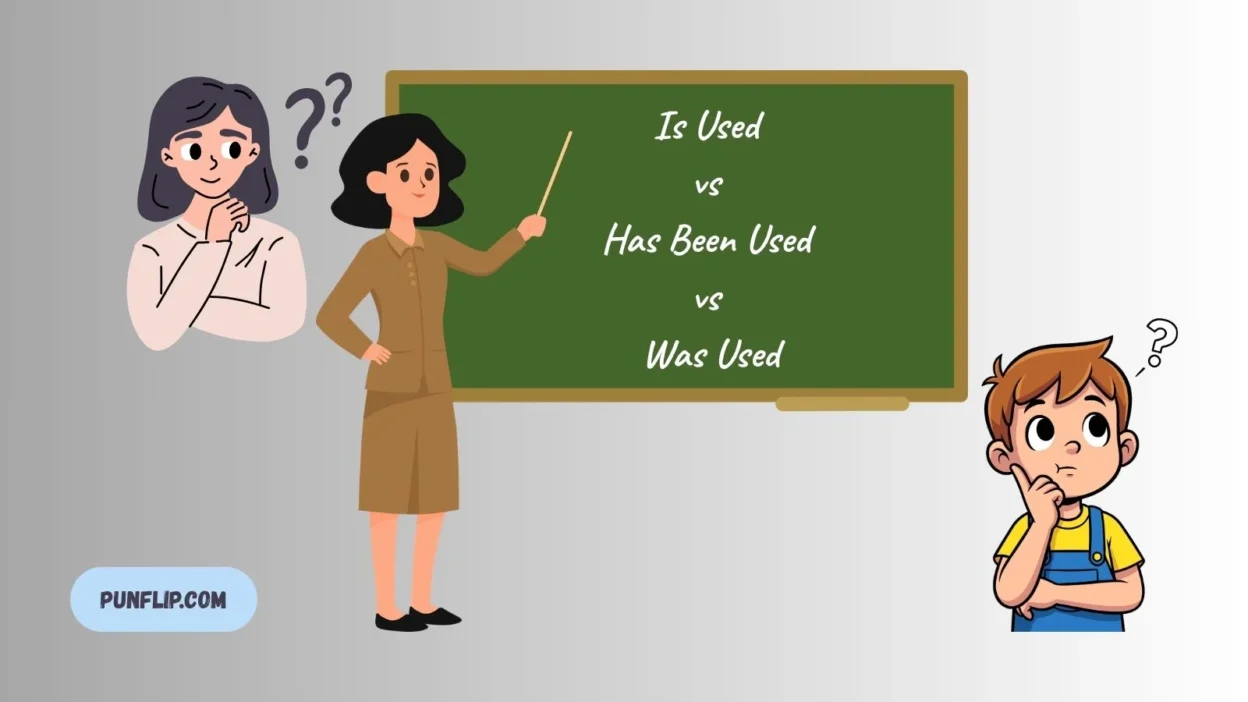
Is used describes something that is currently used or generally true. Has been used refers to something that has been used at some point before now with relevance to the present. Was used describes something that was used at a specific time in the past and is now finished.
Why People Confuse It
These expressions confuse many learners because they:
- Are all passive voice forms.
- Use the same main verb (used).
- Often appear in similar contexts.
- Refer to actions involving an object instead of the person performing the action.
- Differ mainly in verb tense rather than vocabulary.
The key difference is time.
- Is used → Present
- Has been used → Present perfect
- Was used → Simple past
Is Used (First Word)
Is used is the present simple passive.
Structure
Subject + is + used
Meaning
Use is used when talking about:
- General facts
- Current situations
- Regular functions
- Scientific or technical descriptions
Examples
- This software is used by millions of people.
- English is used around the world.
- Glass is used to make windows.
- The room is used for meetings.
- This method is used in modern medicine.
Has Been Used (Second Word)
Has been used is the present perfect passive.
Structure
Subject + has been + used
Meaning
Use it when:
- Something happened before now.
- The exact time isn’t important.
- The action still matters today.
- You want to emphasize experience or recent history.
Examples
- This building has been used as a museum for years.
- The software has been used successfully by many companies.
- The technique has been used in several studies.
- The equipment has been used many times.
- This password has been used before.
Was Used
Was used is the simple past passive.
Structure
Subject + was + used
Meaning
Use was used for completed actions in the past.
Usually, the time is known or understood.
Examples
- The bridge was used during World War II.
- This machine was used yesterday.
- The room was used for the conference.
- The money was used to build a school.
- The old system was used until 2020.
Comparison Table
| Expression | Tense | Time Reference | Best Use |
| Is used | Present Simple Passive | Present or general truth | Habits, facts, functions |
| Has been used | Present Perfect Passive | Past until now | Ongoing relevance, experience |
| Was used | Simple Past Passive | Finished past | Completed past events |
When to Use Each
Choose is used when:
- Talking about facts.
- Explaining how something works.
- Describing current usage.
Choose has been used when:
- The action affects the present.
- Time isn’t specified.
- Something has happened before now.
Choose was used when:
- The action finished in the past.
- A specific past time is mentioned.
- You’re telling a historical event.
Examples
Here are more examples showing the differences.
- English is used in international business.
- The software has been used by over 5,000 companies.
- This road was used during the festival.
- Plastic is used in many products.
- The laboratory has been used for several experiments.
- The key was used yesterday.
- Cotton is used to make clothing.
- This technology has been used worldwide.
- The old building was used as a hospital.
- The system is used every day.
- The same method has been used for decades.
- The equipment was used during the training session.
Common Mistakes
Many learners make these errors:
❌ This computer has been used yesterday.
✅ This computer was used yesterday.
❌ English has been used around the world.
✅ English is used around the world.
❌ The machine is used last week.
✅ The machine was used last week.
❌ This method was used for many years (if it’s still continuing).
✅ This method has been used for many years.
Memory Trick
Remember these three clues:
- Is used = Now
- Has been used = Before now and still important
- Was used = Finished past
If you see yesterday, last week, or in 2019, choose was used.
If you see for years, already, or ever, has been used is often the best choice.
If you’re stating a fact, use is used.
American vs British English
Both American English and British English use is used, has been used, and was used in exactly the same way.
The grammar rules are identical. Differences between American and British English relate more to vocabulary and spelling than to these passive verb forms.
Similar Words
You may also encounter these related passive constructions:
- Is made
- Has been made
- Was made
- Is called
- Has been called
- Was called
- Is known
- Has been known
- Was known
- Is written
- Has been written
- Was written
These follow the same tense patterns as is used, has been used, and was used.
Final Verdict
Understanding the time reference makes choosing the correct expression easy.
- Use is used for present facts and regular functions.
- Use has been used for actions connected to the present.
- Use was used for completed events in the past.
Once you recognize the timeline, selecting the correct passive form becomes much more natural.
Frequently Asked Questions
Is “is used” present tense?
Yes. It is the present simple passive and describes current facts or general truths.
When should I use “has been used”?
Use it when an action happened before now and still has relevance or importance in the present.
Can I say “has been used yesterday”?
No. Yesterday requires the simple past.
Correct: was used yesterday.
Is “was used” always about the past?
Yes. It refers to an action completed in the past.
Which form is most common in academic writing?
All three appear frequently depending on context. Research papers often use has been used to describe previous studies and is used to explain current methods.
Are these all passive voice?
Yes. All three expressions are passive voice because the subject receives the action rather than performs it.
Conclusion
Learning the difference between is used, has been used, and was used helps you write and speak more naturally. Although they share the same verb, each one points to a different moment in time. Paying attention to whether you’re discussing a present fact, an action connected to the present, or a completed past event will guide you toward the correct choice.
The easiest way to master these forms is through regular practice. Read authentic English, notice how native speakers use passive constructions, and create your own example sentences. With time, selecting the correct expression will become automatic.
Remember This
Think about the timeline before choosing the verb.
- Is used → Present fact or current use.
- Has been used → Started before now and still relevant.
- Was used → Finished action in the past.
Master this simple rule, and you’ll avoid one of the most common English grammar mistakes.

Roazi is a visionary thinker driven by creativity, innovation, and purpose. With a passion for excellence, he transforms bold ideas into meaningful realities.