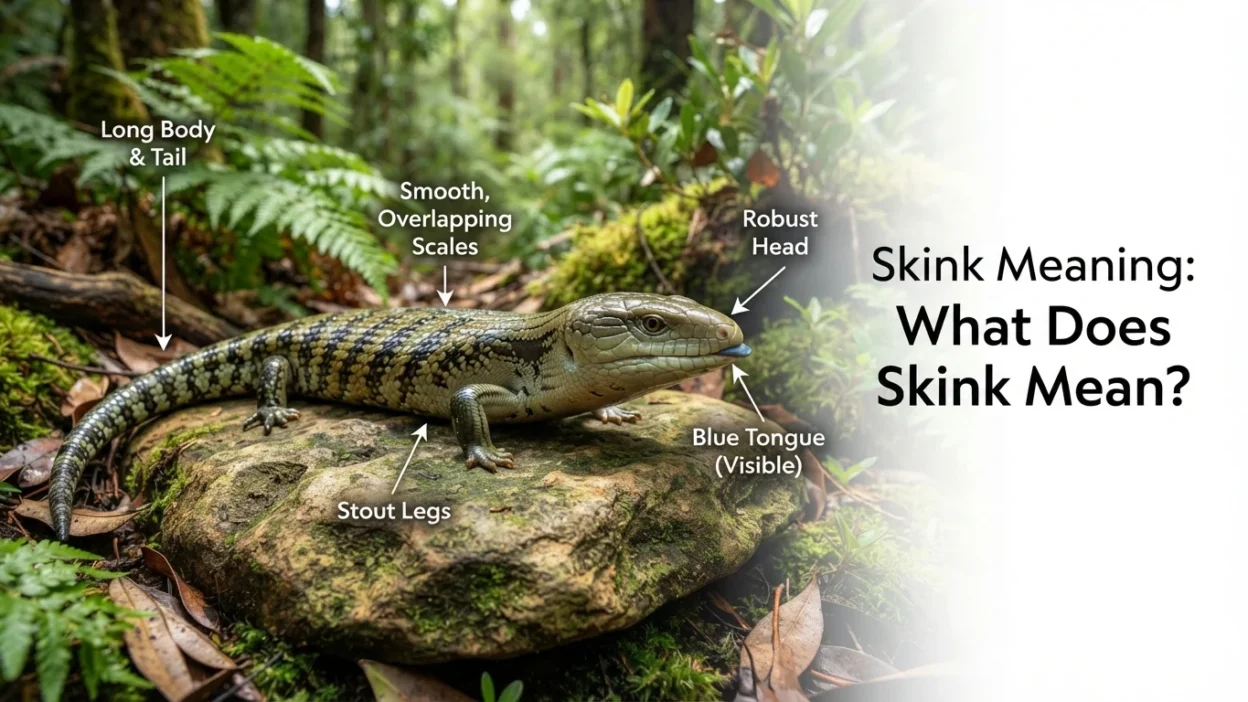
Have you ever come across the word skink and wondered what it means? Maybe you saw it in a wildlife article, heard it in a nature documentary, or noticed a small reptile moving through your garden. Because the word is not used in everyday conversation, many people pause and ask the same question: what does skink mean?
The answer is simple, but the animal itself is more interesting than most people expect. A skink is a type of lizard found in many parts of the world. Some skinks have short legs, some have tiny legs, and a few look almost snake like. In this guide, you will learn the skink meaning, the skink definition, where skinks live, what they eat, whether they are dangerous, and how they differ from other lizards.
Quick Answer
Skink meaning: A skink is a smooth scaled lizard belonging to the family Scincidae.
What Does Skink Mean?
The word skink refers to a large group of reptiles in the lizard family. In biology, the meaning of skink is not slang or a hidden expression. It is simply the name for a specific type of lizard.
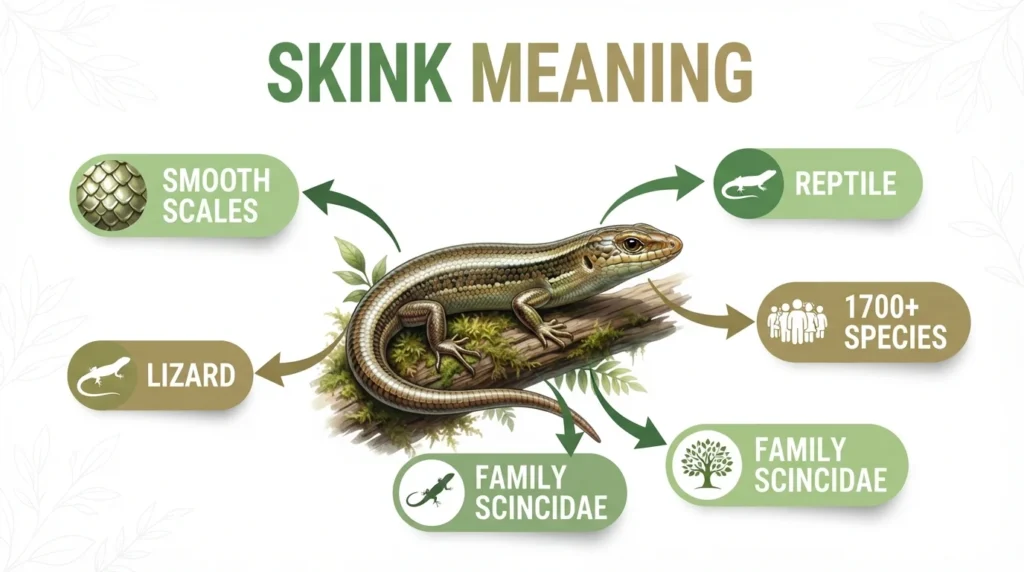
A skink is usually recognised by its:
- smooth, shiny scales
- long body
- short legs, or sometimes very small legs
- fast movement
- ability to hide well in grass, soil, or leaf litter
So, if you searched for skink meaning in English, the simplest answer is this: it is a reptile name, not a symbol or phrase.
Simple summary: A skink is a smooth scaled lizard from the family Scincidae.
Skink Definition in Biology
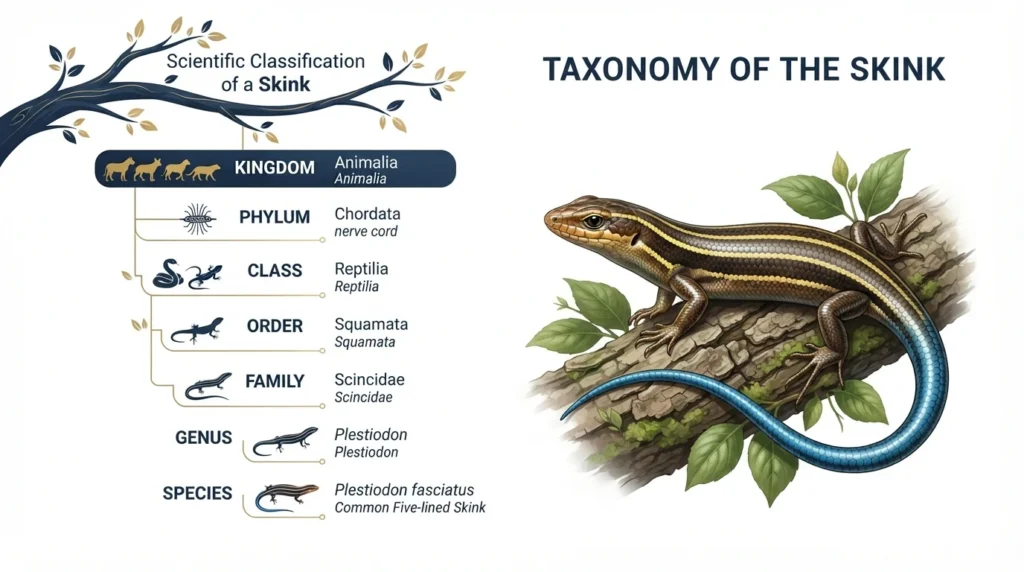
In biology, the skink definition is more precise. Skinks belong to the reptile order Squamata, which also includes snakes and other lizards. Within that order, skinks are placed in the family Scincidae.
Scientific classification
| Classification | Category |
| Kingdom | Animalia |
| Phylum | Chordata |
| Class | Reptilia |
| Order | Squamata |
| Family | Scincidae |
This classification helps explain why skinks are considered a major group of lizards rather than a single species.
What Is a Skink?
If you are asking, what is a skink, the answer is that it is a reptile with many species and many different body styles. There are more than 1,700 known skink species, and they live in a wide range of habitats.
Some skinks are small and secretive. Others are larger and easier to spot. Some burrow underground. Others climb rocks or trees. A few species are popular as pets, especially the blue tongued skink, which is well known for its calm nature and unusual blue tongue.
Skink Meaning in English and Everyday Use
The phrase skink meaning in English usually appears when someone wants to understand a word they have seen in a book, online, or in a science lesson.
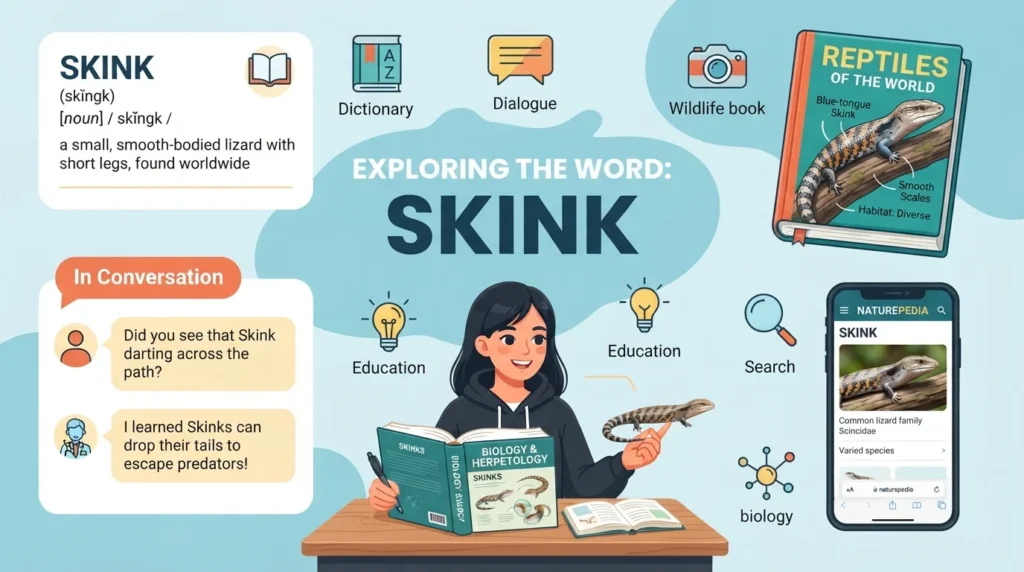
Unlike slang words, the meaning is direct. It refers to a lizard family, not a metaphor, joke, or internet trend.
Example:
- We saw a skink hiding under a rock near the fence.
This is why the term is often searched by students, readers, pet owners, gardeners, and people curious about wildlife.
Skink Pronunciation
The word skink is pronounced:
/skɪŋk/
It rhymes with:
- think
- blink
- drink
This simple pronunciation is one reason the word is easy to remember once you have heard it spoken aloud.
What Does a Skink Look Like?
One reason people confuse skinks with other reptiles is that they do not all look the same. Still, many share a few common skink characteristics.
Most skinks have:
- smooth, glossy scales
- a long, narrow body
- short legs or reduced legs
- a pointed head
- a tail that may be long and thin
- quick, ground level movement
Some skinks have bright colours, while others blend into their surroundings. A few species have stripes, spots, or shiny patterns that help with camouflage.
Where Do Skinks Live?
If you searched where do skinks live, the answer is: almost everywhere except Antarctica.
The skink habitat may include:
- gardens
- forests
- grasslands
- deserts
- tropical rainforests
- rocky hillsides
- coastal areas
- leaf litter and soil
- under logs, stones, or bark
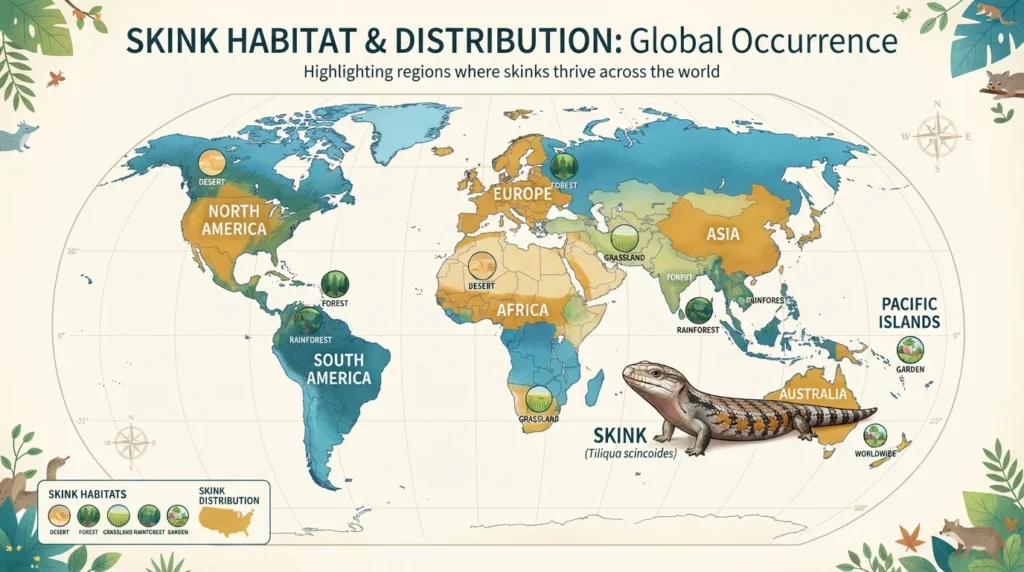
Skinks are found in:
- Australia
- Africa
- Asia
- Europe
- North America
- South America
- Pacific Islands
Australia is especially famous for having a huge variety of skink species.
What Do Skinks Eat?
Most skinks are insect eaters, although diet varies by species. Their food may include:
- insects
- worms
- spiders
- snails
- beetles
- caterpillars
- crickets
- small fruits
- flowers
- leaves
Larger skinks may also eat small animals or other small reptiles. Because many skinks eat pests, they can be useful in natural environments and gardens.
Are Skinks Dangerous?
A common search is are skinks dangerous. In most cases, the answer is no.
Skinks are generally harmless to humans. They prefer to run away, hide, or burrow rather than fight. If handled roughly, they may bite, but the bite is usually mild and not considered dangerous.
Skinks are not poisonous, and most species avoid people.
Are Skinks Good for Gardens?
Yes, many skinks are helpful in gardens.
A garden skink can control pest insects naturally by eating:
- ants
- beetles
- cockroaches
- slugs
- caterpillars
- crickets
This is one reason gardeners often like having skinks around. They are part of the local ecosystem and can help keep insect numbers under control.
Can Skinks Regrow Their Tails?
One of the most interesting facts about skinks is that many species can drop their tails to escape predators. This process is called tail autotomy.
If a predator grabs the tail, the skink may shed it and escape. The moving tail distracts the threat while the lizard gets away. Many skinks can later grow a replacement tail.
This does not happen the same way in every species, but it is one of the best known skink facts.
Skink vs Lizard
People often search for skink vs lizard because skinks are a type of lizard, but not all lizards are skinks.
| Feature | Skink | Other Lizards |
| Scales | Smooth and glossy | Often rough or varied |
| Legs | Usually short or reduced | Can vary widely |
| Body shape | Long and streamlined | Many different shapes |
| Family | Scincidae | Many families |
| Behaviour | Often burrowing or ground dwelling | Can climb, run, or burrow |
So the easiest way to remember it is this:
Every skink is a lizard, but not every lizard is a skink.
Common Types of Skinks
There are many skink species, but some are better known than others.
Blue tongued skink
One of the most famous skinks, often kept as a pet because of its calm nature and blue tongue.
Five lined skink
A small North American skink with stripes, often seen in wooded areas or gardens.
Fire skink
A brightly coloured species known for its red and gold markings.
Crocodile skink
A heavily textured species that looks more rugged than many other skinks.
Sand skink
A burrowing species adapted to life in loose sandy soil.
These examples show how varied the skink family really is.
Interesting Skink Facts
Here are some quick skink facts worth remembering:
- There are more than 1,700 known skink species.
- Some skinks have tiny legs, and some have none at all.
- Many skinks are excellent burrowers.
- Skinks live on many continents.
- Some species give birth to live young instead of laying eggs.
- Many skinks help control insect populations.
- Their smooth scales often help them move easily through soil and leaf litter.
These traits make skinks one of the most successful lizard groups in the world.
Example Sentences of Skink
Here are a few natural examples of the word in use:
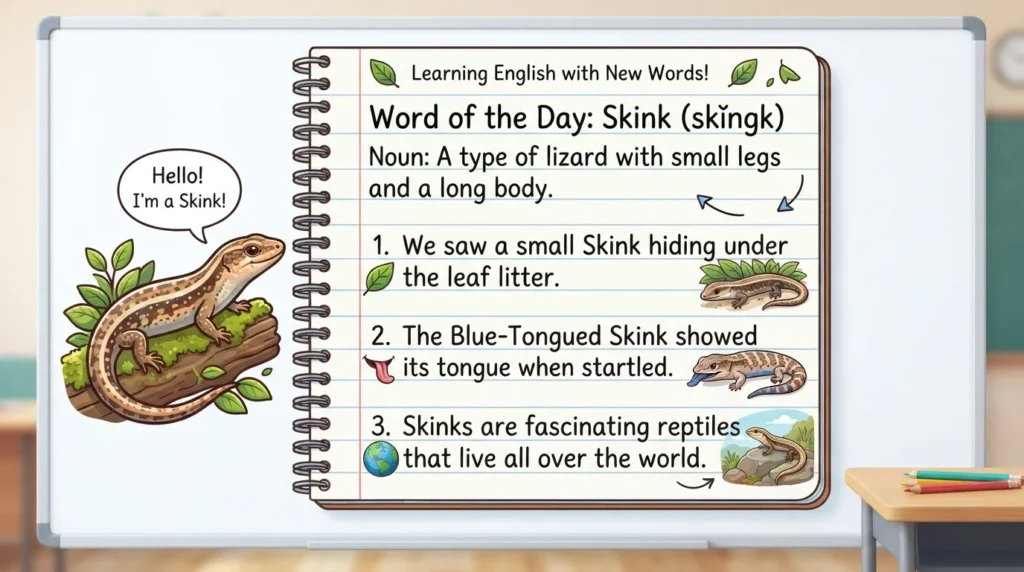
- A skink darted across the garden path.
- The blue tongued skink is one of the best known pet reptiles.
- Scientists study skink species to learn more about reptile evolution.
- We found a skink under a pile of leaves.
- The skink escaped by dropping its tail.
Frequently Asked Questions
What does skink mean?
It means a smooth scaled lizard in the family Scincidae.
What is a skink?
A skink is a reptile and a type of lizard found in many habitats around the world.
Are skinks snakes?
No. Skinks are lizards, even though some species look snake like because of their long bodies and tiny legs.
Are skinks poisonous?
No. Skinks are not poisonous to people.
Can skinks be pets?
Yes. Some species, especially the blue tongued skink, are kept as pets.
Do skinks bite?
They can bite if threatened, but they usually try to escape first.
How many types of skinks are there?
There are more than 1,700 known species.
Why do skinks lose their tails?
Many species do this to escape predators.
Final Thoughts
The skink meaning is easy to understand once you know the basics: a skink is a smooth scaled lizard in the family Scincidae. But the word opens the door to a fascinating group of reptiles that live in forests, gardens, deserts, and grasslands around the world.
Whether you were looking for the skink definition, wondering what is a skink, comparing skink vs lizard, or simply trying to understand a word you saw online, the answer is now clear. Skinks are harmless, useful, and highly adaptable reptiles that play an important role in nature.
If you spot one in the wild, you will know exactly what it is.