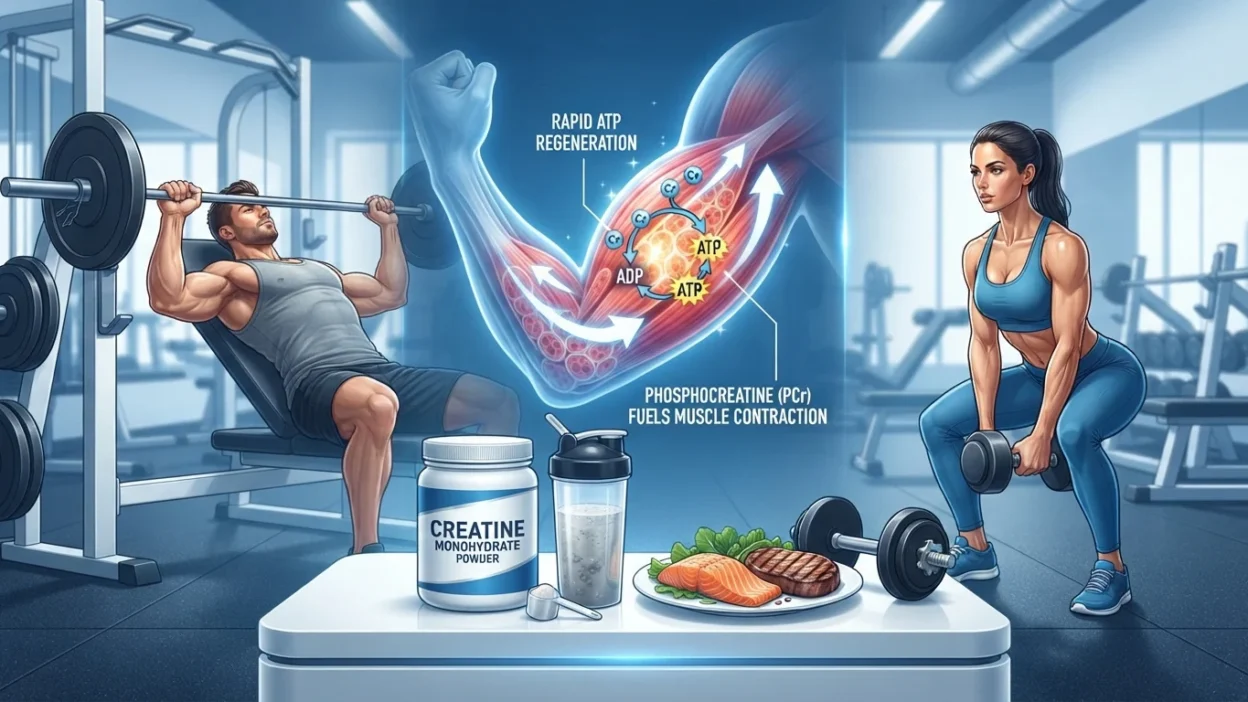
If you spend any time around gym chats, fitness TikTok, or Reddit threads, you have probably seen creatine come up again and again. One person says it helps with strength. Another says it is just for bodybuilders. Someone else asks whether it is safe, whether it causes weight gain, or whether it works at all. That is usually the point when people search what does creatine do.
The short answer is that creatine helps your muscles make quick energy during short, hard bursts of exercise. That is why it is so popular for lifting, sprinting, and other explosive workouts. In this guide, you will get a clear, simple explanation of what creatine is, how it works, creatine benefits, possible side effects, and who may want to use it.
Quick Answer: Creatine helps your muscles produce fast energy, which can improve strength, power, workout performance, and muscle growth over time when paired with resistance training.
What Is Creatine?
Creatine is a natural compound your body already makes, and you also get small amounts from foods like beef and salmon. Your body stores most of it in skeletal muscle, where much of it sits in a form called phosphocreatine. That stored creatine helps make energy quickly during short activity bursts. Creatine monohydrate is the most widely used and most studied form in supplements.
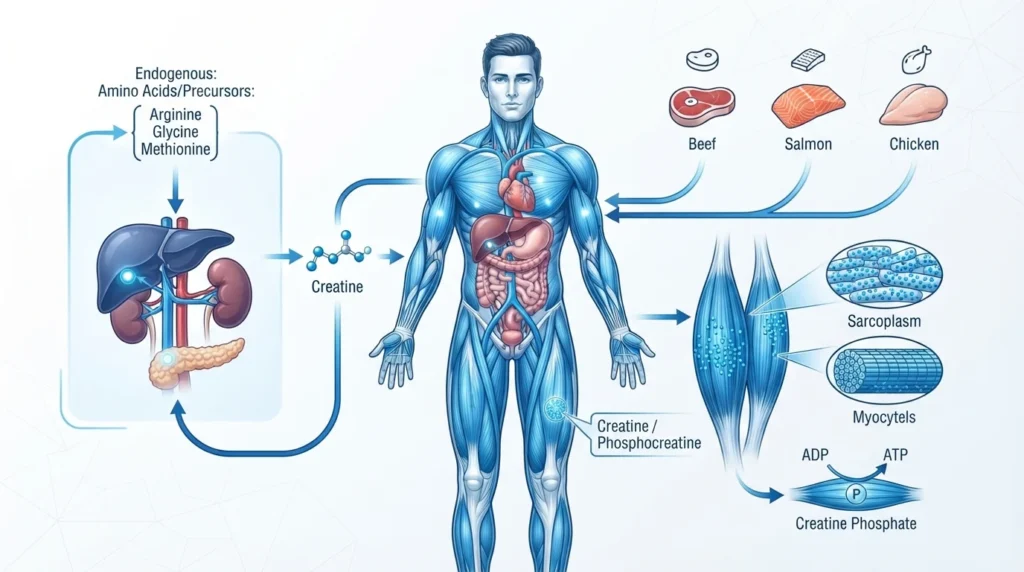
There is no full form of creatine. It is not an abbreviation or slang term. It is simply the name of a compound that plays a role in energy production.
How Does Creatine Work?
To understand how does creatine work, think of your muscles like a phone battery. When you do something intense, such as lifting a heavy weight or sprinting, your body burns through quick energy fast. Creatine helps your muscles rebuild that energy more efficiently, mainly by supporting ATP production. ATP is the body’s main source of immediate energy.
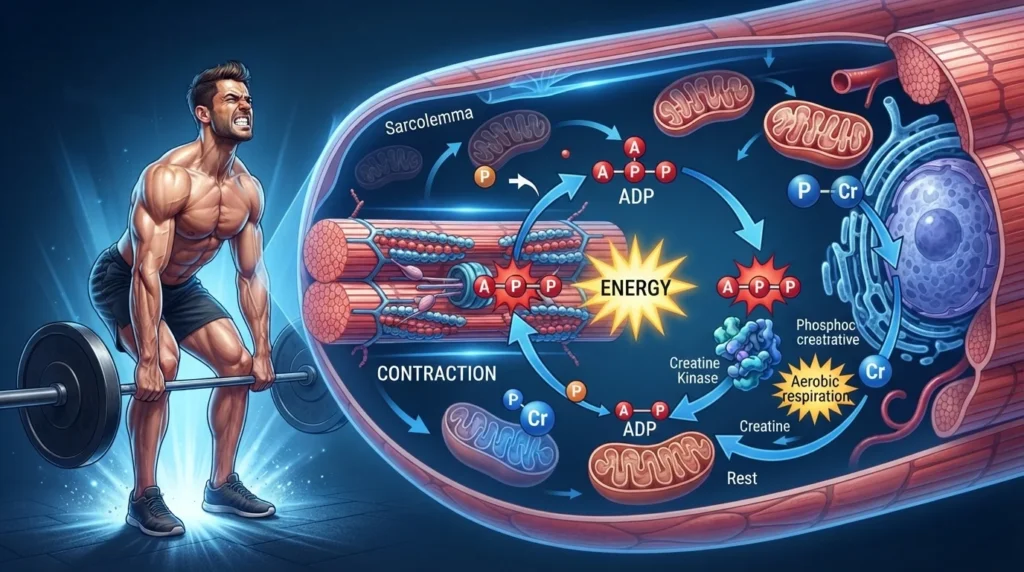
That is why creatine is most useful for high intensity exercise and repeated short bursts of effort. According to the NIH, it can improve strength, power, and the ability to contract muscles for maximum effort, especially during repeated short bursts of intense activity such as sprinting and weightlifting. It has little value for endurance activities like long distance running or cycling.
Main Creatine Benefits
People search for creatine benefits because they want to know whether it is actually worth taking. For the right person, the answer is often yes.
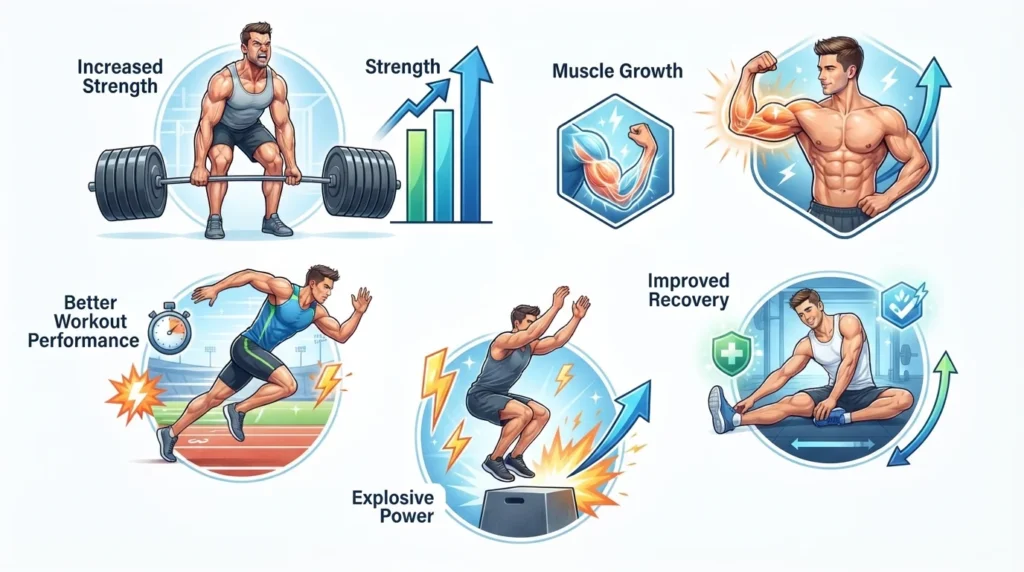
Creatine may help improve strength, power, and performance during repeated high intensity exercise. Mayo Clinic notes that creatine supplements, especially when combined with resistance training, can lead to greater gains in muscle strength, muscle size, and athletic performance.
It may also help with training capacity. In practice, that means you might complete more reps, recover better between sets, or handle hard workouts a little more effectively. The NIH Office of Dietary Supplements and Mayo Clinic both describe creatine as most useful for short, intense exercise with brief recovery periods.
Another common question is does creatine build muscle. Creatine does not build muscle on its own like magic. Instead, it helps you train harder, and that extra training stimulus can support muscle growth over time when combined with resistance exercise and good nutrition.
Who Might Benefit Most?
Creatine is often a strong fit for people who do weight training, sprinting, jumping, team sports, or any workout that depends on short bursts of effort. The NIH says athletes who use creatine often take it to improve performance in activities that involve intense effort followed by short recovery periods. Mayo Clinic also notes that people with lower baseline creatine levels, such as vegetarians, may see more benefit.
That does not mean everyone needs it. If your main exercise is steady cardio or long endurance work, creatine is usually less useful. The biggest benefits show up when training is intense, repeated, and strength based.
How Much Creatine Do People Take?
A common search is how to take creatine. In studies, people often use a loading phase of about 20 grams per day for 5 to 7 days, split into four equal portions, and then switch to a maintenance dose of 3 to 5 grams per day. Some people skip loading and simply take a daily dose from the start. Either approach can work; the main difference is how fast muscle creatine stores rise.
Creatine monohydrate is the most widely used and most studied form. That is why it is usually the default recommendation for people who are new to supplements.
Is Creatine Safe?
A big reason people search is creatine safe is that supplements can be confusing. For most healthy adults, creatine is considered safe for short term use, and evidence also suggests it is safe for long term use over several years when taken as directed.
The most common issue is weight gain, which often happens because creatine increases water retention in muscle. The NIH says this is usually the most consistent effect seen in studies. Some people also report nausea, diarrhea, stomach upset, muscle cramps, stiffness, or heat intolerance, although these reactions are not common for everyone.
Creatine may not be the right choice for everyone. The NCCIH warns that people at risk of kidney problems should check with a healthcare provider before using creatine, and it notes that there are no data proving safety in children or adolescents. It also states that teens should not use performance enhancing supplements, including creatine, because of possible health risks.
Creatine Side Effects and Myths
A lot of confusion comes from social media. Some posts make creatine sound scary, while others make it sound like a miracle. The truth is simpler.
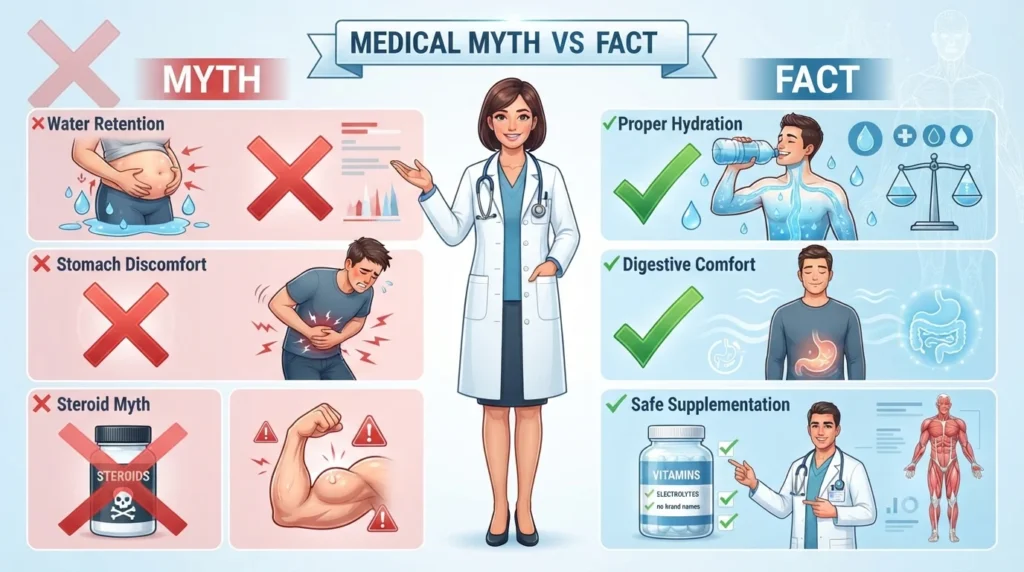
Myth: Creatine is a steroid.
Fact: Creatine is a naturally occurring compound, not a steroid.
Myth: Creatine causes dangerous dehydration for everyone.
Fact: The NIH notes that side effects are not consistent, and creatine often causes water retention rather than dehydration. Staying hydrated is still a smart habit.
Myth: Creatine only works for bodybuilders.
Fact: Creatine may help sprinters, weightlifters, and team sport athletes, and it is mainly useful for short, intense exercise.
Creatine vs Other Supplements
People often compare creatine with protein powder or pre workout, but they do different jobs.
| Context | Example | Why It Matters |
| Creatine | Supports quick energy and workout performance | Best for strength, power, and repeated hard effort |
| Protein powder | Helps you meet protein needs | Useful for muscle repair and overall nutrition |
| Pre workout | May boost energy or focus before training | Usually used for a temporary workout boost |
Creatine is not mainly about energy from caffeine or protein intake. It is about helping your muscles recycle fast energy more efficiently during intense effort.
When to Use Creatine and When Not To
Use creatine if you want support for lifting, sprinting, jumping, or sports that depend on repeated high intensity effort. It fits best into a routine that already includes training, sleep, hydration, and decent nutrition.
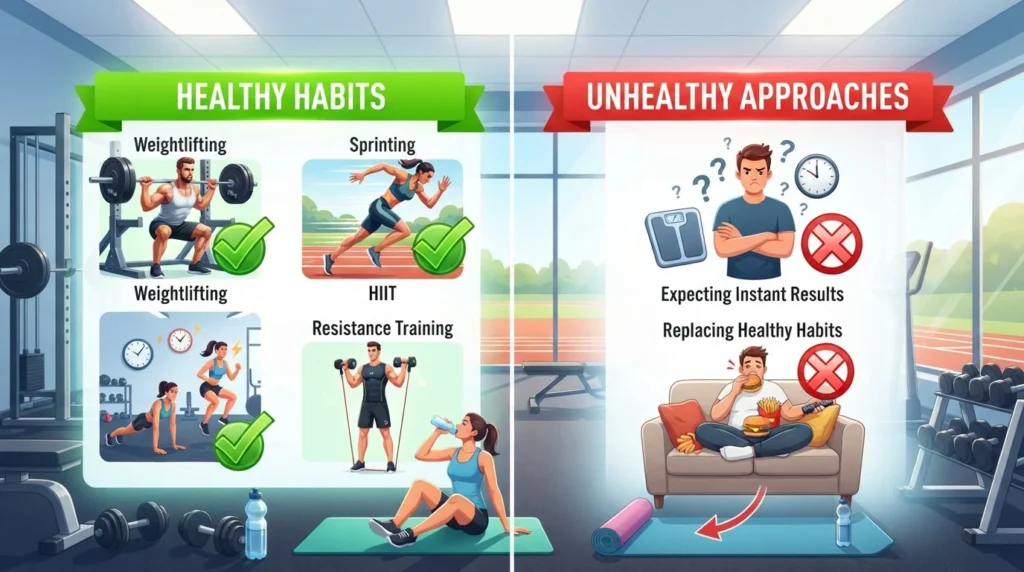
Do not expect creatine to replace exercise, and do not use more than recommended just because you want faster results. If you have kidney concerns, are under 18, or have a medical condition, it is better to talk with a healthcare professional first.
FAQ
What does creatine do for your body?
Creatine helps your muscles store and use quick energy more effectively, which can improve performance during short, intense exercise.
What does creatine do for muscles?
It supports fast energy production in muscle tissue, which can help with strength, power, and training volume.
How long does creatine take to work?
It depends on whether you load it or just take a daily maintenance dose. Studies often use 5 to 7 days of loading followed by daily maintenance, but some people skip loading and still get results over time.
Does creatine make you gain weight?
It can cause some weight gain, mostly because it increases water retention in muscle.
Is creatine safe for beginners?
For most healthy adults, yes, when used as directed. Beginners with medical concerns should check with a clinician first.
Can women take creatine?
Yes. Creatine is not just for men or bodybuilders. It can support training performance for many adults who do resistance or high intensity exercise.
Is creatine the same as protein?
No. Creatine helps with quick energy. Protein helps build and repair body tissue. They are different and can be used for different goals.
Final Thought
If you have been wondering what does creatine do, the answer is clear: it helps your muscles make quick energy for hard exercise, which can improve strength, power, and training performance over time. It is one of the most researched supplements in sports nutrition, and creatine monohydrate is the most studied form.
For healthy adults who train hard, it can be a practical tool, not a miracle pill. The best results still come from consistent workouts, good food, enough sleep, and steady habits.

Roazi is a visionary thinker driven by creativity, innovation, and purpose. With a passion for excellence, he transforms bold ideas into meaningful realities.