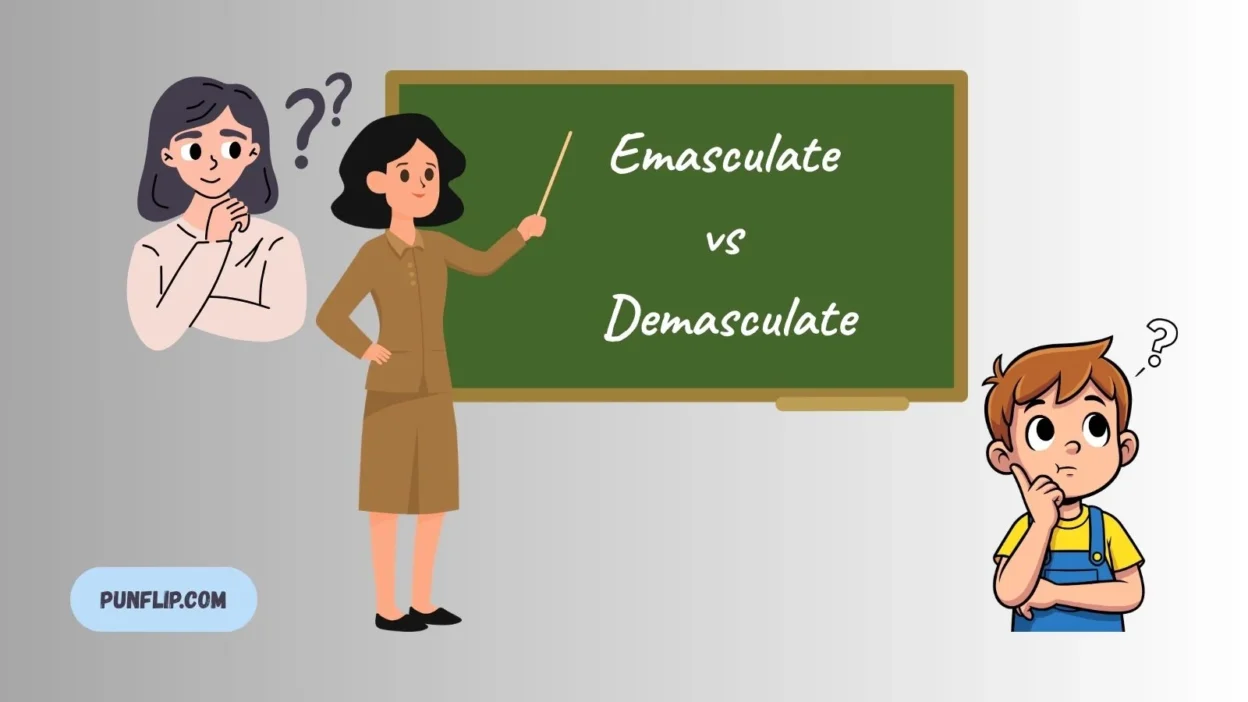
Many English learners and even native speakers occasionally wonder whether they should use emasculate or demasculate. Since both words seem to have similar prefixes and appear to carry related meanings, it’s easy to assume they’re interchangeable. However, that’s not the case.
The truth is much simpler than it looks. One of these words is a standard English word used in dictionaries, literature, journalism, and academic writing. The other is considered extremely rare and is generally not accepted in modern standard English. Understanding the difference will help you write more naturally, speak more confidently, and avoid common vocabulary mistakes.
Whether you’re preparing for an English exam, writing professionally, or simply expanding your vocabulary, this guide explains everything you need to know in plain English.
Quick Answer
Emasculate is the correct and widely accepted English word. It means to weaken, deprive someone of strength, confidence, or traditionally masculine qualities. Demasculate is a very rare, nonstandard word that appears only occasionally in historical or obscure texts. In modern English, you should almost always use emasculate.
Why People Confuse It
The confusion usually comes from the prefixes.
Many English words beginning with de- mean “remove” or “reverse,” such as:
- deactivate
- devalue
- dehydrate
- decentralize
Because of this pattern, some people naturally assume that demasculate should exist as the opposite or variant of emasculate.
However, English doesn’t always follow predictable patterns. In this case, emasculate is already the established verb, and demasculate never became part of standard modern English.
Emasculate
Meaning:
Emasculate means:
- to weaken someone’s strength, authority, or confidence
- to deprive someone of vigor or effectiveness
- historically, to castrate (literal meaning)
Today, the word is most often used figuratively rather than literally.
Examples
- Constant criticism can emasculate a person’s confidence.
- The new policy emasculated the committee’s authority.
- He felt emasculated after losing control of the project.
- The editor removed key arguments, emasculating the article.
- The reforms emasculated the organization’s influence.
Common contexts
- confidence
- authority
- leadership
- politics
- relationships
- organizations
- writing and arguments
Demasculate
Meaning:
Demasculate is an extremely rare word that has occasionally appeared in older writings. It was intended to carry a meaning similar to emasculate, but it has never become standard English.
Most modern dictionaries either:
- don’t include it,
- label it obsolete,
- or mark it as a nonstandard variant.
Should you use it?
For modern English writing, no.
Use emasculate instead.
Comparison Table
| Feature | Emasculate | Demasculate |
| Standard English | ✅ Yes | ❌ No |
| Found in modern dictionaries | ✅ Yes | Rarely |
| Common in writing | ✅ Very common | ❌ Extremely rare |
| Recommended today | ✅ Yes | ❌ No |
| Used in academic writing | ✅ Yes | ❌ No |
| Safe for exams | ✅ Yes | ❌ No |
When to Use Each
Use emasculate when:
- writing essays
- speaking formally
- writing professionally
- discussing authority or confidence
- describing weakened power
- preparing for exams
- creating academic content
Avoid demasculate unless:
- quoting an old historical text
- discussing obsolete vocabulary
- analyzing historical language usage
For everyday English, simply choose emasculate.
Examples
Here are practical examples showing correct usage.
- The harsh feedback emasculated his confidence.
- Budget cuts emasculated the research department.
- The amendment emasculated the original proposal.
- She argued that unfair stereotypes can emasculate young men emotionally.
- Years of conflict emasculated the country’s economy.
- The manager avoided language that might emasculate employees.
- Removing key evidence emasculated the lawyer’s argument.
- His public criticism emasculated the team’s morale.
- The revised rules emasculated the committee’s authority.
- The editor refused to emasculate the author’s message.
- Many writers prefer stronger wording instead of language that may emasculate someone’s role.
- Good leadership strengthens people rather than emasculating them.
Common Mistakes
Many learners make these errors:
❌ Demasculate his confidence.
✅ Emasculate his confidence.
❌ The law was demasculated.
✅ The law was emasculated.
❌ Demasculate is the modern spelling.
✅ Emasculate is the accepted modern spelling.
❌ Both words are equally common.
✅ Only emasculate is commonly used today.
Memory Trick
Remember this simple rule:
E = Established.
Emasculate begins with E, and it’s the Established English word.
If you remember “E for Established,” you’ll always choose the correct word.
American vs British English
There is no significant difference between American and British English.
Both varieties:
- use emasculate
- recognize it as the standard word
- rarely use demasculate
Whether you’re writing in the United States, the United Kingdom, Canada, Australia, or elsewhere, emasculate is the correct choice.
Similar Words
Depending on the context, these words may express similar ideas:
- weaken
- undermine
- diminish
- reduce
- impair
- cripple
- sap
- debilitate
- enfeeble
- discourage
- disempower
- neutralize
Choose the synonym that best matches your intended meaning.
Final Verdict
If you’re deciding between emasculate and demasculate, the answer is straightforward.
Emasculate is the standard, dictionary recognized, and widely accepted English word. It appears in books, newspapers, academic writing, professional communication, and everyday English.
Demasculate, on the other hand, is an uncommon historical variant that has little place in modern writing. Unless you’re studying obsolete language or quoting historical sources, it’s best avoided.
For clear, accurate, and professional English in 2026 and beyond, always choose emasculate.
Frequently Asked Questions (FAQs)
Is demasculate a real word?
It has appeared in some historical sources, but it is extremely rare and is not considered standard modern English.
Which word should I use in writing?
Use emasculate. It is the accepted and widely recognized form.
Is demasculate incorrect?
In modern English, it is generally considered nonstandard or obsolete for everyday use.
Does emasculate always refer to masculinity?
No. While it originally referred to removing masculine characteristics, it is now commonly used figuratively to mean weakening someone’s confidence, authority, or effectiveness.
Is emasculate offensive?
It can be sensitive depending on the context because it relates to identity and confidence. Use it thoughtfully and only when appropriate.
Is emasculate used in formal English?
Yes. It appears in academic writing, journalism, literature, and professional communication.
Are emasculate and weaken always interchangeable?
Not always. Emasculate often carries an added sense of reducing confidence, authority, or traditionally masculine qualities, while weaken is broader.
Remember This
If you’re ever unsure:
- ✅ Emasculate = Correct modern English
- ❌ Demasculate = Rare, obsolete, and generally avoided
Think “E for Established English.”
Conclusion
Although emasculate and demasculate may look alike, modern English clearly favors emasculate. It is the recognized verb in dictionaries and is the word used by educated speakers and writers around the world. Whether you’re talking about weakening authority, reducing confidence, or describing a figurative loss of strength, emasculate is the appropriate choice.
By remembering that demasculate is an obsolete or nonstandard variant, you’ll avoid a common vocabulary mistake and write with greater confidence. Whenever you encounter this pair in the future, choosing emasculate will ensure your English sounds natural, accurate, and professional.

Jessica Emily is a passionate and driven individual who blends creativity with purpose. She believes in inspiring growth, empowering ideas, and making a lasting difference through her work.