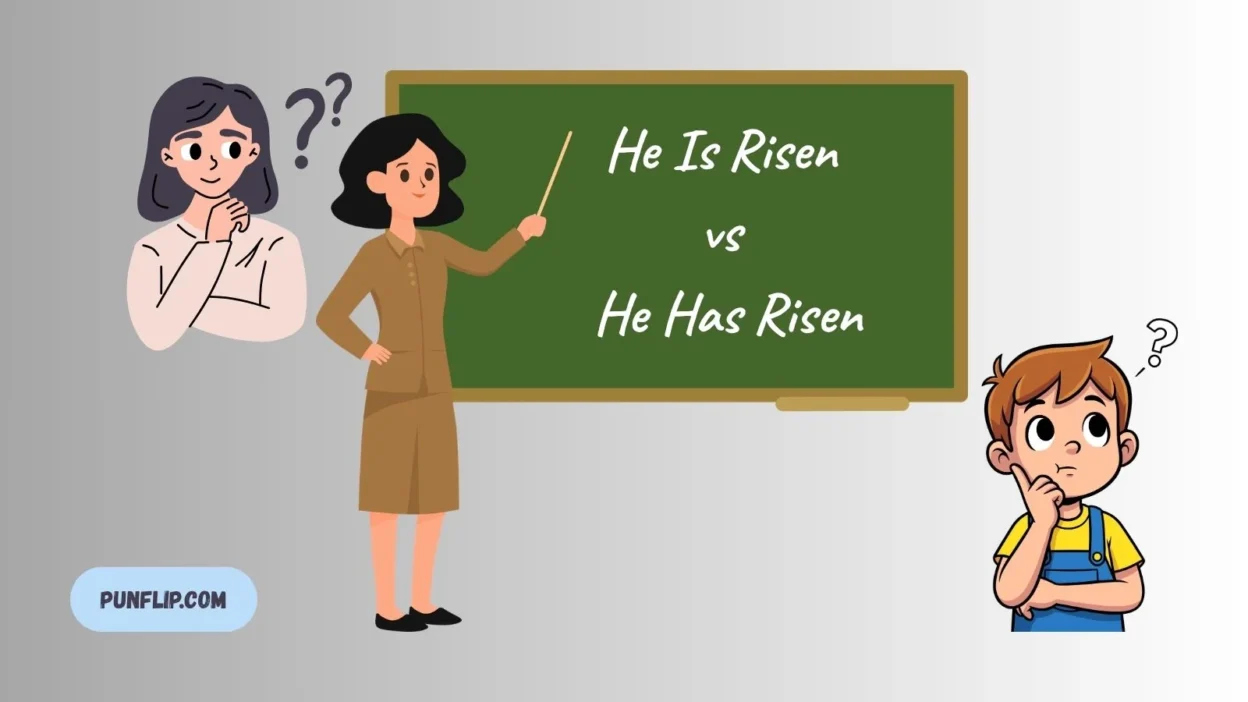
If you’ve ever wondered whether you should say “He is risen” or “He has risen,” you’re not alone. These two expressions look similar, refer to the same event, and are often used around Easter. However, they are not interchangeable in every situation. One is a traditional religious expression, while the other follows standard modern English grammar.
Understanding the difference is easier than it seems. Once you know the historical background and grammatical structure, you’ll be able to use each phrase confidently in conversations, writing, Bible discussions, or church services. This guide explains everything in plain English with examples, common mistakes, and practical tips so you never confuse them again.
Quick Answer
“He is risen” is a traditional biblical and liturgical expression used mainly in Christian worship and Easter celebrations. “He has risen” is the grammatically standard modern English form that expresses the completed action of rising from the dead. Both refer to Jesus’ resurrection, but they belong to different language styles and historical traditions.
Why People Confuse It
Many English learners—and even native speakers—assume these expressions mean different things because one uses is while the other uses has.
The confusion happens because:
- Both describe the resurrection of Jesus.
- Both are heard during Easter.
- Older English translations use He is risen.
- Modern English normally uses He has risen with the verb rise.
- Many churches intentionally preserve the traditional wording.
Although the meaning is essentially the same, the grammar and usage are different.
He Is Risen
“He is risen” is a traditional Christian proclamation.
It comes from older forms of English, when some verbs formed the perfect tense with be instead of have. This style survived in religious language even after everyday English changed.
Today, He is risen is considered:
- A liturgical expression
- A traditional Easter greeting
- A phrase commonly heard in churches
- A quotation style found in older Bible translations and hymns
Example:
- He is risen! Alleluia!
- The congregation joyfully proclaimed, “He is risen!”
Although it sounds unusual in everyday English, it remains completely appropriate in religious settings.
He Has Risen
“He has risen” is the standard modern English construction.
It uses the present perfect tense:
- has (auxiliary verb)
- risen (past participle of rise)
This is the form taught in modern English grammar and used in most everyday writing.
Examples:
- Christ has risen from the dead.
- The Bible says Jesus has risen.
- Christians believe that He has risen.
Outside formal church traditions, this is generally the preferred grammatical form.
Comparison Table
| Feature | He Is Risen | He Has Risen |
| Grammar | Traditional historical construction | Modern present perfect |
| Modern English | Not standard outside religious use | Standard English |
| Common Context | Easter greetings, worship, hymns | Everyday English, teaching, writing |
| Historical Origin | Older English and liturgy | Modern English grammar |
| Meaning | Jesus has risen | Jesus has risen |
| Formality | Traditional and ceremonial | Neutral and modern |
When to Use Each
Use He Is Risen when:
- Celebrating Easter.
- Quoting traditional Christian expressions.
- Writing church materials.
- Singing hymns.
- Referring to historical religious language.
Examples:
- He is risen indeed!
- The pastor proclaimed, “He is risen!”
- The church banner read, “He is risen.”
Use He Has Risen when:
- Writing modern English.
- Explaining the resurrection.
- Teaching grammar.
- Writing essays or articles.
- Speaking in everyday conversation.
Examples:
- Christ has risen according to Christian belief.
- The sermon explained that Jesus has risen from the dead.
- Many Christians celebrate because He has risen.
Examples
Here are examples showing both expressions in context.
Using “He Is Risen”
- He is risen indeed!
- The church bells rang because He is risen.
- The choir sang, “He is risen.”
- The Easter banner read, “He is risen!”
- Christians greeted one another with “He is risen.”
- The ancient hymn proclaims, “He is risen.”
Using “He Has Risen”
- Jesus has risen from the dead.
- Christ has risen according to the Gospel accounts.
- Believers rejoice because He has risen.
- The pastor explained that Jesus has risen.
- Many people believe Christ has risen forever.
- The lesson teaches that Jesus has risen in fulfillment of prophecy.
Common Mistakes
Avoid these common errors:
❌ He is rose.
✅ He is risen.
❌ He has rose.
✅ He has risen.
❌ He has rise.
✅ He has risen.
❌ Using He is risen in ordinary grammar lessons as if it were the normal present perfect.
✅ Explain that it is a traditional religious expression.
Memory Trick
Here’s an easy way to remember:
- He HAS risen = Modern English grammar.
- He IS risen = Traditional church language.
Think of it this way:
HAS = today’s grammar.
IS = historic worship tradition.
That simple rule works almost every time.
American vs British English
There is no significant difference between American and British English in this case.
Both varieties:
- Recognize He has risen as standard grammar.
- Preserve He is risen in religious traditions.
- Use He is risen indeed as a traditional Easter greeting.
The distinction is based on style and historical usage, not regional English.
Similar Words
If you’re learning religious or historical English, you may also encounter:
- Christ is risen
- Christ has risen
- He is alive
- He has come back to life
- The Resurrection
- Risen Savior
- Jesus rose
- Jesus has risen
- Easter greeting
- Resurrection of Christ
Learning these related expressions helps you understand Bible passages and Easter celebrations more naturally.
Final Verdict
Both “He is risen” and “He has risen” communicate the same central Christian belief: that Jesus rose from the dead. The difference lies in grammar and tradition, not meaning.
If you’re writing or speaking in modern English, He has risen is the grammatically standard choice. If you’re quoting Scripture, participating in Easter worship, or using traditional Christian language, He is risen remains perfectly appropriate and deeply meaningful. Knowing when each fits allows you to communicate respectfully and accurately in every context.
Frequently Asked Questions
1. Is “He is risen” grammatically correct?
Yes. It is grammatically correct as a traditional historical expression, although it is not the normal form in modern English.
2. Which is correct in modern English?
He has risen is the standard modern English construction.
3. Why do churches still say “He is risen”?
Churches preserve the traditional wording because of its long history in Christian worship, hymns, and Easter liturgy.
4. Do both phrases mean the same thing?
Yes. Both refer to the resurrection of Jesus Christ.
5. Can I use “He has risen” in church?
Absolutely. Many modern Bible translations and sermons use He has risen.
6. Is “He is risen indeed” correct?
Yes. It is the traditional Easter response to “He is risen!”
7. Which phrase should English learners use?
For general English writing and speaking, He has risen is the better choice. Learn He is risen as a traditional religious expression.
Conclusion
The phrases “He is risen” and “He has risen” share the same meaning but belong to different language traditions. He is risen preserves centuries of Christian history and continues to be used in Easter worship and liturgy. He has risen, on the other hand, follows the grammar of modern English and is appropriate for everyday writing and conversation.
Understanding this distinction helps you appreciate both the history of the English language and the traditions of Christian worship. Whether you’re reading the Bible, attending an Easter service, or simply improving your English, choosing the right expression depends on the context rather than the meaning.
Remember This
Use “He has risen” for modern English grammar.
Use “He is risen” for traditional Christian worship, Easter greetings, hymns, and historical religious language.