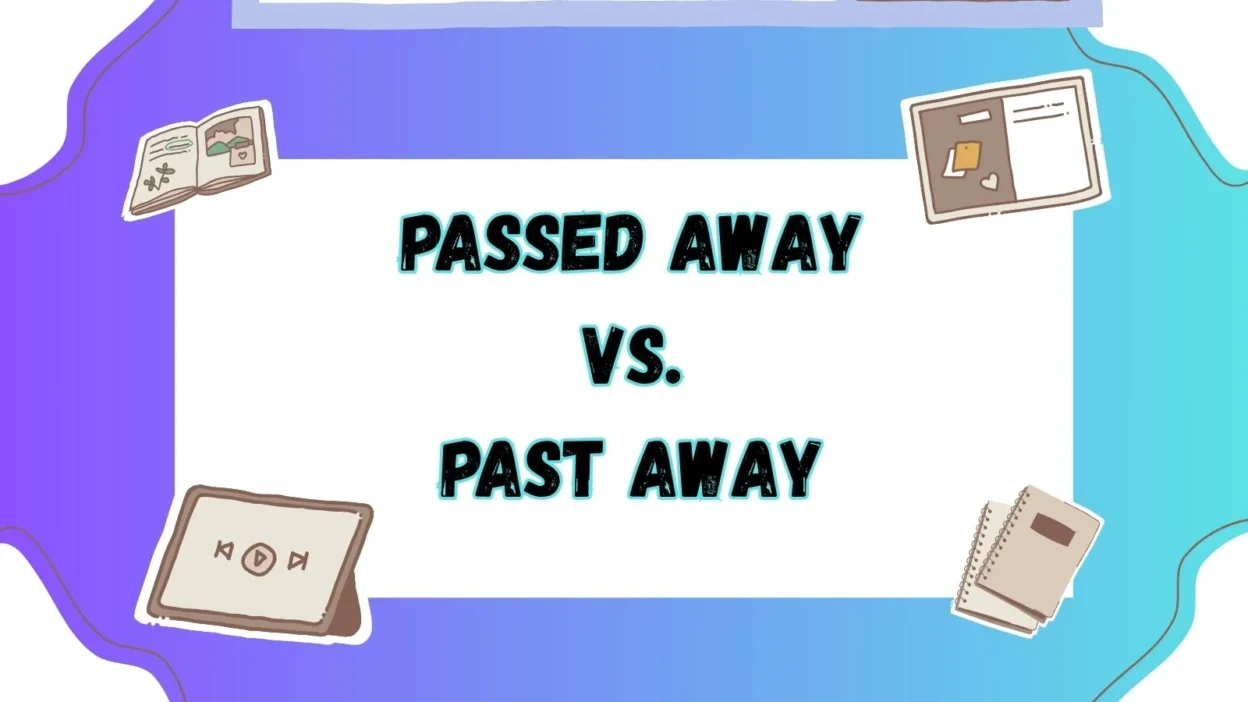
Many English learners see “passed away” and “past away” and think both phrases mean the same thing. They look and sound similar, so the mistake is easy to make. But only one of them is correct in normal English.
This confusion happens because:
- Passed and past are very close in spelling.
- Both words are common in English.
- People hear the phrase in speech, but do not always see it written.
- The meaning is linked to a serious topic, so learners may feel unsure.
The good news is simple: once you understand the difference, you will never mix them up again.
Quick Answer
- Passed away is correct English.
- It means to die in a polite and gentle way.
- Past away is not correct in this meaning.
- Past is usually a word about time, position, or something that has already happened.
- So, when you want to say that someone died, use passed away, not past away.
Simple Origin or Background Explanation
The phrase passed away comes from the verb pass. In this phrase, pass means to move from one state to another. Over time, English speakers began using passed away as a gentle way to talk about death.
People often prefer this phrase because it sounds softer and kinder than the direct word died. It is common in:
- family conversations
- news reports
- sympathy messages
- formal writing
- respectful speech
The word past is different. It usually means:
- time before now
- something already finished
- a place or position beyond something
That is why past away does not work as a correct phrase for death.
Clear Explanation of the Difference
Here is the easiest way to remember it:
- Passed away = correct phrase for death
- Past away = incorrect phrase
What does “passed away” mean?
It is a polite way to say that someone died.
Example:
- Her grandfather passed away last year.
What does “past” mean?
Past is usually a noun, adjective, or preposition.
Examples:
- The past is gone.
- The bus went past my house.
- It is past 5 o’clock.
Why is “past away” wrong?
Because past does not work with away in this meaning. English speakers do not use this combination to mean death. It sounds strange and incorrect.
Comparison Table
| Feature | Passed away | Past away |
| Correct English? | Yes | No |
| Meaning | To die, in a gentle way | No standard meaning |
| Word type | Phrase with the verb “pass” | Wrong combination |
| Common in speech? | Yes | No |
| Common in writing? | Yes | No |
| Example | My aunt passed away in 2020. | My aunt past away in 2020. |
| Best use | Formal, polite, respectful | Avoid using it |
Which One to Use and When
Use passed away when you want to talk about death in a kind and respectful way.
Use it in these situations:
- talking about a family member
- writing a sympathy message
- reporting sad news
- speaking politely in public
- writing in a formal or emotional way
Examples:
- My grandmother passed away peacefully.
- The teacher’s father passed away yesterday.
- We were sad to hear that he passed away.
Do not use “past away”
Do not write or say:
- She past away last night.
- He past away in the hospital.
- My uncle past away years ago.
These are incorrect.
A simple rule
If you mean death, use passed away.
If you are talking about time or position, use past in the correct way, such as:
- the past year
- past noon
- walk past the shop
Common Mistakes People Make
Here are the most common mistakes and how to fix them.
| Wrong sentence | Correct sentence | Why |
| My father past away. | My father passed away. | “Passed away” is the correct phrase. |
| She past away peacefully. | She passed away peacefully. | Use the verb “passed.” |
| We heard the news that he past away. | We heard the news that he passed away. | “Past” is the wrong word here. |
| He past away last year. | He passed away last year. | This is the standard phrase. |
| They said her mother past away. | They said her mother passed away. | “Passed away” is the polite form. |
Why learners make this mistake
- The two words look almost the same.
- Pronunciation can sound similar when spoken quickly.
- Some people learn phrases by ear and not by reading.
- Spelling memory may be weak under pressure.
Easy memory trick
Think like this:
- passed has ed because it is a verb in the past tense
- past is only a time word, not the death phrase
So for death, remember: passed away.
Everyday Real Life Examples
Emails
In a formal email, you may write:
- I am sorry to hear that your mother passed away.
- We send our deepest sympathy after your father passed away.
This sounds respectful and caring.
News
News reports often use passed away when talking about a person’s death in a softer way.
Examples:
- The famous singer passed away at the age of 78.
- The actor passed away after a long illness.
Social media
People may use it in posts when sharing sad news.
Examples:
- Just heard that my uncle passed away today. Rest in peace.
- Our family is heartbroken after our grandmother passed away.
Daily use
People say:
- My neighbor passed away last week.
- His pet dog passed away after many years.
This phrase is common in daily English because it sounds gentle.
Short Learning Section For Students and Beginners
Learn the difference in one line
- Passed away = died
- Past away = wrong
Remember these examples
| Meaning | Correct phrase | Example |
| Death | passed away | My grandfather passed away. |
| Time | past | The meeting is past. |
| Movement beyond something | past | She walked past the store. |
Practice activity
Choose the correct phrase:
- My aunt passed away / past away last month.
- He passed away / past away quietly in his sleep.
- The bus went passed away / past away the station.
Answers
- passed away
- passed away
- past the station
Simple tip for exams
If the sentence is about someone dying, do not think too long. Write passed away.
FAQ
1. Is “passed away” formal or informal?
It can be both, but it is often seen as polite, respectful, and gentle.
2. Is “past away” ever correct?
No, not in the meaning of death. It is not the correct phrase.
3. Can I say “died” instead of “passed away”?
Yes. Died is correct and direct. Passed away is softer and more polite.
4. Why do people avoid saying “died”?
Sometimes people use gentler words because the topic is sad. Passed away can feel less harsh.
5. Is “passed on” the same as “passed away”?
Sometimes people use passed on in a similar way, but passed away is more common and clearer.
6. Can I use “past” in a sentence about death?
No. Past is not used to mean death. Use passed away.
7. What is the easiest way to remember the correct phrase?
Remember this rule: passed away has the verb passed, and it is used for death.
8. Is “passed away” used for pets too?
Yes, many people use passed away for pets when they want to speak gently and respectfully.
Conclusion
The difference is very simple:
- Passed away is the correct phrase.
- Past away is incorrect.
Use passed away when you want to say that someone died in a polite and respectful way. Use past only for time or movement, not for death.
A good memory trick is this: if the sentence is about someone no longer being alive, choose passed away every time. That small rule will help you write and speak more clearly, naturally, and correctly.